

Static Guarding
- Static security solutions increasingly combine guards, patrols, and remote monitoring for a layered, dynamic approach.
- This integration supports businesses with comprehensive protection strategies that complement public safety efforts.
Enhanced Professionalism and Regulation
- The sector operates within a strict regulatory framework, with the Security Industry Authority (SIA) licence mandatory for many roles.
Expanded Guard Capabilities
- Guards are trained beyond traditional duties to include emergency response (medical, fire, security breaches) and conflict de-escalation.

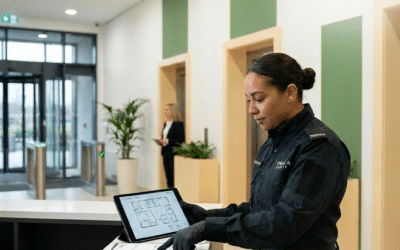
- Additional roles include concierge services, access control, visitor management, system monitoring, and risk assessments.
- Specialised training such as Action Counters Terrorism (ACT) Awareness enhances threat identification and collaboration with law enforcement.

Diverse Applications and Bespoke Solutions
- Services are customised for various sectors including airports, corporate offices, events, and retail.
- Providers offer tailored security assessments and solutions, including the use of security dogs and flexible short-notice coverage.
UK Private Security Sector: In-Depth Overview of Static Guarding
1. Integration of Services and Technology
The traditional role of static guards has evolved significantly with the incorporation of technology and multi-layered security strategies. Modern security firms combine physical guarding with patrol services and remote electronic monitoring, such as CCTV and alarm response systems. This integration allows for quicker detection and response to incidents while maximising resource efficiency. Advanced technologies like mobile apps for guard patrol tracking, biometric access control, and real-time incident reporting enhance communication between guards and control rooms, improving overall situational awareness and operational effectiveness.
2. Enhanced Professionalism and Regulation
The UK private security industry is one of the most regulated sectors, with the Security Industry Authority (SIA) playing a central role in maintaining standards. The SIA licence is compulsory for a wide range of roles, ensuring personnel are properly vetted through background checks, trained to recognised standards, and adhere to a strict code of conduct. This licensing system helps protect clients and the public by ensuring that only qualified individuals undertake security duties.
In addition to licensing, security companies often undergo accreditation through other schemes .
3. Expanded Guard Capabilities
Modern static guards possess a broad skill set extending far beyond traditional watch keeping. Training now routinely includes first aid, fire safety, conflict resolution, and customer service skills to handle diverse situations professionally. Guards may be responsible for managing access control systems, screening visitors, and maintaining detailed logs of site activity.
 Specialised training programmes like the Action Counters Terrorism (ACT) Awareness course equip guards with knowledge on recognising suspicious behaviours related to terrorism threats, enabling early intervention and collaboration with police forces. Guards may also be trained in handling hazardous materials or operating specific security equipment, depending on client requirements.
4. Diverse Applications and Bespoke Security Solutions
Static guarding services are tailored to meet the unique needs of a variety of environments:
- Corporate premises: Providing reception duties, visitor management, and securing sensitive areas.
- Retail: Preventing theft, managing crowd control during busy periods, and ensuring customer safety.
- Events: Managing entry points, monitoring crowds, and responding swiftly to incidents.
- Transport hubs: Airports and train stations require guards trained in specific protocols for passenger safety and emergency response.
- Residential estates: Offering peace of mind through patrols, access control, and rapid incident response.
Security providers conduct thorough risk assessments to identify vulnerabilities and design bespoke security plans combining static guarding with technology such as CCTV, intruder alarms, and security lighting. Some clients may require additional services such as security dogs for deterrence or specialised protection during high-profile events.
5. Challenges and Future Trends
The sector is adapting to emerging challenges such as cyber threats impacting physical security systems, increased demand for sustainability in operations, and the need to address mental health and wellbeing among security personnel. Recruitment and retention remain critical issues due to industry demands and competition from other sectors.
Looking ahead, greater use of artificial intelligence (AI) in monitoring systems, integration of drones for surveillance, and enhanced data analytics will continue to shape the future of static guarding. However, the human element—judgement, presence, and customer interaction—remains irreplaceable in providing effective security services.


0 Comments